
Curt Echo Brake Controller: A Comprehensive Guide
Navigating the world of trailer braking demands knowledge, and this guide focuses on the Curt Echo. It simplifies setup, offering precise control and dependable stopping power for safer towing experiences.
What is a Brake Controller and Why Do You Need One?
A brake controller is a vital component when towing a trailer, acting as the link between your vehicle and the trailer’s braking system. Unlike a car, a trailer doesn’t automatically slow down when you brake; a controller allows you to apply the trailer brakes proportionally or manually. Hundreds of trailering accessories exist, but a brake controller significantly impacts safety and control.
Essentially, it makes a trailer stop more like a car, providing predictable and smooth braking. For trailers weighing 3,000 pounds or more, brakes are legally required – and on all axles in states like Colorado. Without a controller, stopping distances increase dramatically, posing a serious risk. Selecting the right controller, like the Curt Echo, ensures dependable stopping power and precise control during towing.
Understanding Trailer Brakes and Legal Requirements
Trailer brakes are crucial for safe towing, and understanding their operation is paramount. They aren’t self-activating like those in your vehicle; they require a signal from a brake controller to engage. Legal requirements surrounding trailer brakes vary by location, but generally, trailers exceeding a certain weight need them. Colorado law mandates brakes on trailers weighing 3,000 pounds or more, applied to every axle.
However, regulations can differ for trailers originating from other states, so awareness is key. Proper braking ensures manageable stopping distances and prevents dangerous situations. Setting up a trailer for towing is time-consuming but essential for safe driving, and adhering to legal standards is non-negotiable for responsible towing practices.
Colorado Trailer Brake Laws
Colorado’s regulations regarding trailer brakes are specific and designed to enhance road safety for all drivers; The state mandates that any trailer with a Gross Vehicle Weight Rating (GVWR) of 3,000 pounds or more must be equipped with brakes on every axle. This isn’t merely a recommendation; it’s a legal requirement enforced to ensure adequate stopping power when towing substantial loads.
Furthermore, Colorado authorities often scrutinize trailers originating from out of state to verify compliance with these standards. Ignoring these laws can result in citations and potential safety hazards. Understanding and adhering to Colorado’s trailer brake laws is vital for anyone towing within the state, promoting responsible and lawful towing practices.
Brake Requirements Based on Trailer Weight
Determining the necessary braking system for your trailer hinges directly on its weight; Trailers under 3,000 pounds GVWR generally don’t require brakes in many jurisdictions, though checking local laws is crucial. However, once a trailer exceeds this weight threshold, brakes become mandatory on all axles. This ensures sufficient stopping force to safely control the trailer, especially during emergency situations or downhill descents.
The heavier the trailer, the more critical a robust braking system becomes. Properly matched brake controllers, like the Curt Echo, are essential for proportional braking, applying the appropriate amount of force. Ignoring weight-based brake requirements compromises safety and potentially violates legal regulations.
Introducing the Curt Echo Mobile Brake Controller
The Curt Echo represents a significant leap forward in trailer brake control technology. Debuting at the 2018 SEMA show, this mobile controller distinguishes itself through its wireless connectivity and smartphone-based operation. Unlike traditional, in-cab controllers, the Echo utilizes a compact module that connects to your vehicle’s electrical system and communicates with a smartphone app via Bluetooth.
This innovative design offers unparalleled convenience and a clean, uncluttered dashboard. The Echo simplifies the often time-consuming process of setting up a trailer for towing, providing a user-friendly interface for calibration and adjustments. It’s a modern solution for a safer, more controlled towing experience.
Key Features of the Curt Echo
The Curt Echo boasts a suite of features designed for ease of use and optimal performance. Its wireless connectivity, controlled via a smartphone app, eliminates the need for a bulky in-cab controller. Precise control over braking is achieved through proportional braking, mimicking the driver’s braking input for smooth, predictable stops.
The Echo also offers customizable user profiles, allowing drivers to save preferred settings for different trailers or driving conditions. Built-in diagnostics provide valuable feedback, and the compact module design ensures discreet installation. It truly makes a trailer stop more like a car, enhancing overall towing safety and convenience.
Benefits of a Mobile Brake Controller
Mobile brake controllers, like the Curt Echo, offer distinct advantages over traditional units. The primary benefit is a cleaner, more streamlined vehicle interior, free from bulky controller mounts. Wireless operation provides flexibility and convenience, allowing control via a smartphone app from an optimal position.
Furthermore, mobile controllers often feature advanced customization options and diagnostic capabilities. They simplify the often time-consuming process of setting up a trailer for towing, ensuring a safer and more controlled experience. Ultimately, a mobile controller enhances the overall towing experience, providing precise control and dependable stopping power.
Curt Echo Brake Controller Installation
Installing the Curt Echo requires careful attention to detail, but streamlines the process compared to traditional controllers. The installation involves three key stages: wiring the unit to the vehicle’s electrical system, connecting it to the trailer connector, and securely mounting the Echo within easy reach.
Proper wiring is crucial for functionality, demanding adherence to the provided wiring diagram. Secure mounting ensures the controller remains stable during travel. While seemingly complex, the Echo’s design simplifies these steps, making it accessible for many DIY enthusiasts. Always prioritize safety and consult the manual for specific vehicle compatibility.
Wiring the Curt Echo: A Step-by-Step Guide
Begin by disconnecting the vehicle’s battery to prevent shorts. Identify the necessary wires – typically brake light, ground, and power – using your vehicle’s wiring diagram. Connect the Echo’s wiring harness, matching colors carefully. A properly wired connection is paramount for safe operation.
Secure all connections with appropriate connectors, ensuring a snug fit. Double-check the wiring against the manual’s diagram before reconnecting the battery. Proper grounding is essential for preventing electrical interference. This meticulous approach guarantees a reliable connection and optimal performance of the brake controller.
Connecting to the Vehicle’s Electrical System
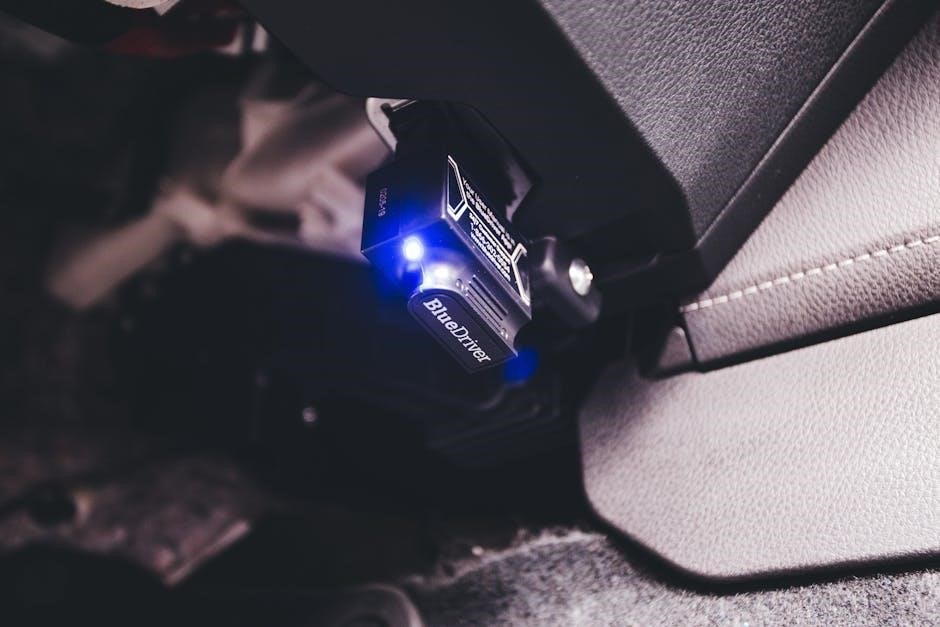
The Curt Echo seamlessly integrates with your vehicle’s existing electrical system via the OBDII port. Simply plug the controller into the port, typically located under the dashboard. The Echo draws power and communicates brake signals through this single connection, eliminating the need for complex wiring.
Ensure the connection is secure to avoid interruptions during operation. The controller will automatically detect your vehicle’s braking system. Verify compatibility using the Curt website or manual. This streamlined process simplifies installation and minimizes potential errors, offering a user-friendly experience.
Mounting the Curt Echo in Your Vehicle
The Curt Echo’s compact design allows for versatile mounting options within your vehicle’s cabin. Utilizing the included adhesive mount, securely attach the controller to a readily accessible surface – the dashboard, center console, or steering column are ideal locations. Ensure the chosen spot doesn’t obstruct driving visibility or essential controls.
Prioritize a stable, non-slip surface for optimal performance. Consider the proximity to the OBDII port for convenient access. Proper mounting prevents movement during braking, maintaining accurate control. A secure placement enhances usability and contributes to a cleaner, more organized vehicle interior.
Setting Up and Programming the Curt Echo
Initial setup of the Curt Echo is streamlined through the accompanying mobile app, available for both iOS and Android devices. Download the app and connect to the controller via Bluetooth. The app guides you through a calibration process, establishing a baseline for your vehicle and trailer combination.
This calibration ensures accurate proportional braking. Subsequently, you can fine-tune brake sensitivity and response to match your specific towing needs and preferences. User profile customization allows for saving settings for different trailers, simplifying switching between loads. Regular recalibration is recommended after significant changes to trailer weight or vehicle setup.
Initial Setup and Calibration
The Curt Echo’s initial setup revolves around the user-friendly mobile app, a cornerstone of its design. Begin by downloading the app and establishing a Bluetooth connection with the brake controller. The app then initiates a guided calibration sequence, crucial for optimal performance.
This process involves a series of controlled braking maneuvers, allowing the Echo to learn your vehicle’s braking characteristics. Accurate calibration is paramount, establishing a baseline for proportional braking. Ensure a level surface and follow the app’s instructions precisely. Successful calibration is confirmed within the app, preparing the Echo for customized adjustments.
Adjusting Brake Sensitivity and Response
Fine-tuning the Curt Echo’s sensitivity and response is achieved entirely through the mobile app, offering granular control. Users can adjust the ‘Aggressiveness’ setting, dictating how quickly the trailer brakes engage relative to the tow vehicle. Higher settings yield more assertive braking, ideal for heavier loads or demanding conditions.
Experimentation is key; start with moderate settings and incrementally adjust based on real-world towing experiences. The app also allows for ‘Response Delay’ adjustments, influencing the initial brake application speed. Proper calibration ensures smooth, predictable stops, enhancing safety and control during towing. Regularly revisit these settings as load conditions change.
User Profile Customization
The Curt Echo truly shines with its user profile capabilities, allowing multiple drivers to save personalized braking preferences. Each profile stores individual settings for aggressiveness, response delay, and brake sensitivity, ensuring optimal control for everyone behind the wheel.
Creating profiles is straightforward via the mobile app; simply add a driver name and configure their desired settings. This eliminates the need to readjust the controller every time a different person tows the trailer. It’s a significant safety feature, promoting consistent braking performance and reducing driver fatigue. Profiles can be easily switched or edited as needed, offering ultimate flexibility.
Using the Curt Echo Brake Controller
The Curt Echo operates through a user-friendly mobile app, providing intuitive control over your trailer brakes. Manual brake application is achieved by simply adjusting the slider within the app, allowing for precise braking force modulation. However, the real power lies in its proportional braking system.
Proportional braking automatically applies the trailer brakes in sync with the vehicle, mirroring the driver’s braking input. This creates a natural and responsive feel, enhancing safety and control. The Echo also features an emergency brake function, providing maximum stopping power when needed, accessible directly through the app interface for quick response.
Manual Brake Application
The Curt Echo’s manual brake application is straightforward, utilizing the mobile app interface for complete control. Users simply adjust the slider within the app to increase or decrease the braking force applied to the trailer. This allows for precise adjustments based on road conditions, load weight, and driving preferences.
This feature is particularly useful for situations requiring independent trailer braking, such as descending steep grades or maneuvering in tight spaces. The app provides real-time feedback, displaying the current braking output level. Mastering manual application ensures optimal control and responsiveness, complementing the proportional braking system for a safer towing experience.
Proportional Braking Explained
The Curt Echo excels with its proportional braking system, mirroring the vehicle’s deceleration. As the tow vehicle slows, the Echo applies corresponding braking force to the trailer, creating a smooth and natural stopping experience. This system utilizes the vehicle’s accelerometer to detect deceleration rates, translating them into appropriate trailer brake signals.
Unlike traditional controllers, proportional braking minimizes jerky stops and enhances stability, especially during emergency situations. The Echo’s sensitivity settings allow users to fine-tune the responsiveness, adapting to different trailer weights and driving styles. This intelligent system significantly improves control and reduces driver fatigue during long hauls.
Emergency Brake Functionality
The Curt Echo prioritizes safety with its dedicated emergency brake feature. Activated by a firm, deliberate press of the mobile app’s brake icon, this function immediately applies maximum braking force to the trailer, independent of the vehicle’s deceleration. This provides crucial stopping power during unexpected events or critical situations requiring rapid deceleration.
It’s designed for scenarios where the vehicle alone may not be sufficient to halt the trailer quickly enough. Users should familiarize themselves with the emergency brake’s activation procedure and understand its powerful effect. While effective, it’s intended for genuine emergencies and should not be used for routine braking, as it can cause abrupt stops.
Troubleshooting Common Issues
Even with a user-friendly device like the Curt Echo, occasional issues can arise. A common problem is the controller failing to recognize the trailer; ensure proper wiring connections at both the vehicle and trailer ends, and verify the trailer’s lights are functioning correctly. If the brakes aren’t activating, double-check the initial setup and calibration process within the mobile app.
Pay close attention to any error messages displayed on the app, as these provide valuable clues to the problem. Refer to the comprehensive troubleshooting section within the Curt Echo manual for detailed explanations and solutions. Remember, a systematic approach to diagnosis is key to resolving issues efficiently and safely.
Curt Echo Not Recognizing Trailer
If your Curt Echo isn’t recognizing the trailer, begin by meticulously inspecting all wiring connections. Confirm the 7-way connector at both the vehicle and trailer is securely fastened and free from corrosion. Verify the trailer’s running lights, brake lights, and turn signals are operational – a lack of signal can prevent recognition.
Within the Curt Echo app, navigate to the trailer setup section and attempt a manual trailer detection. Consult the manual for specific instructions on initiating this process. Ensure Bluetooth is enabled and the app has necessary permissions. If problems persist, try restarting both the mobile device and the Curt Echo unit itself, then repeat the connection process.
Brake Controller Not Activating Brakes
When the Curt Echo fails to activate the trailer brakes, systematically check several key areas. First, confirm the emergency brake isn’t engaged on the trailer itself. Then, verify the Echo is properly paired with your mobile device and that the app displays a successful connection. Within the app, ensure the brake output slider isn’t set to zero and that the trailer profile is correctly configured for your trailer’s weight.
Inspect the trailer’s brake wiring for any breaks or loose connections. A faulty ground connection is a common culprit. Refer to the manual for troubleshooting steps related to low voltage or signal issues, and consider testing the trailer brakes independently to isolate the problem.
Error Messages and Their Meanings
The Curt Echo mobile app displays error messages to aid in troubleshooting. A “No Trailer Detected” message indicates a communication issue; re-check the wiring connections at the vehicle and trailer, and ensure the Echo is properly powered. “Over Voltage” suggests a problem with the vehicle’s electrical system – consult a qualified technician. “Low Voltage” may signify insufficient power reaching the controller, potentially due to a weak battery or faulty wiring.
Other messages might relate to sensor malfunctions or internal errors. The manual provides a comprehensive list of all potential error codes and their corresponding solutions, guiding users through the diagnostic process for swift resolution.
Maintenance and Care
Maintaining your Curt Echo ensures optimal performance and longevity. Regularly inspect the wiring connections for corrosion or damage, tightening any loose connections. Keep the unit clean by wiping it down with a damp cloth; avoid harsh chemicals or abrasive cleaners. Periodically check the mobile app for available firmware updates, as these often include performance enhancements and bug fixes.
Compatibility with newer vehicles and trailer systems is maintained through these updates. Proper storage when not in use, away from extreme temperatures and moisture, will also contribute to the Echo’s lifespan. Refer to the manual for detailed cleaning instructions.
Cleaning and Inspection
Regular cleaning and inspection are vital for the Curt Echo’s reliable operation. Use a soft, damp cloth to wipe down the controller’s surface, removing dust and grime. Avoid abrasive cleaners or solvents that could damage the unit. Inspect the wiring harness and connections frequently for signs of wear, corrosion, or loose connections – tighten as needed.
Check the mobile app connection stability. Ensure the mounting location remains secure and doesn’t obstruct vehicle controls. A quick visual inspection before each towing trip can identify potential issues early, preventing unexpected problems on the road. Consult the manual for specific cleaning recommendations.
Firmware Updates and Compatibility
Maintaining up-to-date firmware is crucial for optimal Curt Echo performance and compatibility. Regularly check the Curt website or mobile app for available updates, as these often include bug fixes, enhanced features, and improved vehicle compatibility. Follow the provided instructions carefully during the update process to avoid interrupting it.
The Echo is designed to work with a wide range of vehicles, but compatibility can vary. Before purchasing, verify compatibility with your specific vehicle make and model using Curt’s online fit guide. Ensure your vehicle’s electrical system meets the Echo’s requirements for proper operation and safe towing.
Curt Echo vs. Traditional Brake Controllers
Comparing the Curt Echo to traditional brake controllers reveals distinct advantages and disadvantages. Traditional controllers require professional installation and a dedicated mounting location, while the Echo’s mobile design offers flexibility and ease of use. However, traditional units often provide more granular control options for experienced towers.

The Echo excels in simplifying the setup process, debuting at the 2018 SEMA show to address towing complexities. While some prefer the tactile feedback of a traditional dial, the Echo’s app-based interface offers convenience and portability, making it ideal for those who frequently switch trailers or tow vehicles.
Pros and Cons of Mobile Controllers

Mobile brake controllers, like the Curt Echo, present a compelling alternative to traditional units, but aren’t without trade-offs. A significant pro is their portability – easily switching between vehicles eliminates re-installation costs and hassles. Setup is generally faster, simplifying the towing preparation process, and the app-based control offers a modern user experience.
However, reliance on a smartphone connection introduces potential drawbacks. Connectivity issues or phone compatibility concerns can disrupt functionality. Some users may prefer the direct, tactile control of a traditional dial. Ultimately, the best choice depends on individual towing needs and preferences, balancing convenience against potential limitations.
When to Choose the Curt Echo
The Curt Echo shines for those who frequently switch tow vehicles or desire a streamlined setup process. If you tow with multiple cars, trucks, or SUVs, the Echo’s portability saves significant time and expense compared to installing traditional controllers in each. It’s ideal for occasional towers who want a user-friendly experience without complex wiring.
Furthermore, the Echo appeals to tech-savvy individuals comfortable with smartphone-based control. For those prioritizing convenience and a modern interface, it’s a strong contender. However, if you require a dedicated, always-on solution or prefer tactile control, a traditional brake controller might be more suitable.